Time Management Tips for CEE Exam: Master 200 MCQs in 180 Minutes
⏳ Every second counts: Strategic time allocation for CEE 2026
The CEE exam is not just a test of knowledge — it's a test of speed, accuracy, and decision-making under pressure. With 200 MCQs to solve in 180 minutes, you have only 54 seconds per question. But here's the truth: top rankers don't solve every question in 54 seconds. They strategically allocate time, skip wisely, and maximize their net score. This guide provides a proven time management blueprint, section-wise pacing, OMR strategies, and last-minute tactics to help you conquer the CEE 2026 exam.
📊 The Golden Time Allocation Formula
Based on feedback from previous CEE toppers, here's the optimal time distribution across sections:
| Section | Questions | Recommended Time | Time per Question | Buffer |
|---|---|---|---|---|
| 🧬 Biology (Zoology + Botany) | 70 | 70-75 minutes | ~60 seconds | High weightage → spend more time |
| ⚛️ Physics | 50 | 45-50 minutes | ~54 seconds | Numericals may take longer |
| 🧪 Chemistry | 50 | 40-45 minutes | ~48 seconds | Formula-based → faster |
| 🧠 MAT (Mental Ability) | 30 | 20-25 minutes | ~40 seconds | Fastest section |
| 📝 Revision & OMR Check | — | 10-15 minutes | — | Crucial for catching errors |
🎯 Section-Wise Pacing Strategy
🧬 Biology (70 Questions | 70-75 Minutes)
Biology has the highest weightage and requires careful reading. Many questions are conceptual or diagram-based. Strategy:
- First pass (45 mins): Solve all straightforward theory questions, one-liners, and direct facts.
- Second pass (20 mins): Attempt moderate difficulty questions (case-based, assertion-reason).
- Third pass (5-8 mins): Flagged difficult questions — if unsure, skip (no negative marking for unmarked).
⚛️ Physics (50 Questions | 45-50 Minutes)
Physics is numerically intensive — you can't rush this section. Strategy:
- Priority 1 (25 mins): Solve formula-based direct questions and small numericals first.
- Priority 2 (15 mins): Attempt multi-step numericals and conceptual theory questions.
- Priority 3 (5-8 mins): If a numerical takes more than 90 seconds, flag and skip. Return if time permits.
🧪 Chemistry (50 Questions | 40-45 Minutes)
Chemistry offers the best speed-to-accuracy ratio. Strategy:
- First (20 mins): All Physical Chemistry numericals and formula-based questions.
- Second (15 mins): Organic reactions, name reactions, IUPAC naming.
- Third (8-10 mins): Inorganic periodic trends and coordination compounds.
🧠 MAT (30 Questions | 20-25 Minutes)
Mental Ability is the speed booster. Strategy:
- Complete MAT in one go (20 mins): Solve analogies, series, coding-decoding, and basic reasoning first.
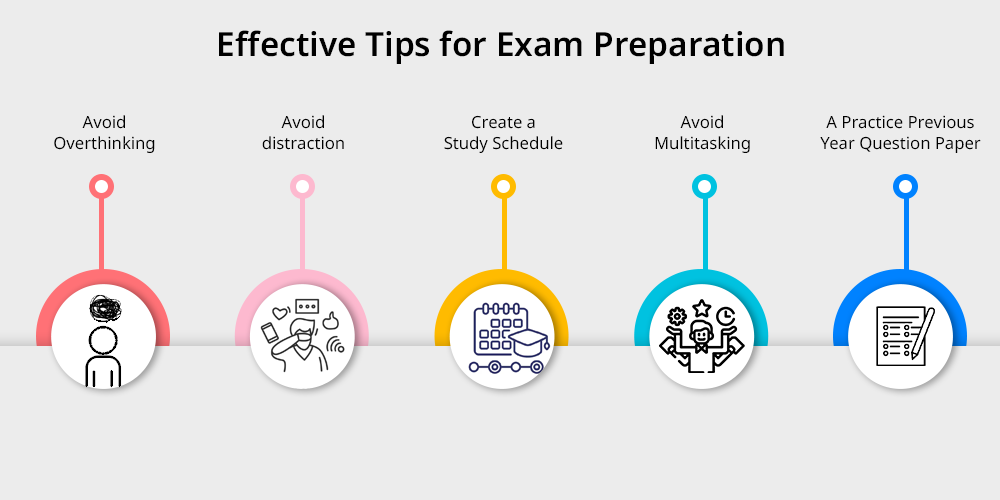
- Avoid overthinking: MAT answers are usually straightforward. If stuck beyond 45 seconds, guess and move.
⏱️ The 3-Hour Exam: Minute-by-Minute Breakdown
| Time Block | Action | Target |
|---|---|---|
| 0:00 - 0:05 | Read instructions, fill OMR headers, browse paper | Identify easy questions across sections |
| 0:05 - 1:15 | BIOLOGY (70 questions) | Complete 60-65 questions |
| 1:15 - 1:55 | CHEMISTRY (50 questions) | Complete 45+ questions |
| 1:55 - 2:40 | PHYSICS (50 questions) | Complete 40-45 questions |
| 2:40 - 3:00 | MAT + OMR verification + flagged questions | Complete MAT (30), recheck OMR |
✏️ OMR Filling: The Silent Time Killer
- The Block Method: Solve 10-15 questions on paper, then transfer answers to OMR. This avoids frequent switching between booklet and sheet.
- Darken completely: Light bubbles may not be read by scanner.
- Double-check question numbers: One wrong bubbling can shift all subsequent answers.
- Final 5 minutes: Dedicate exclusively to OMR verification — ensure no skipped bubbles.
🚦 The Art of Skipping (When to Move On)
With negative marking of -0.25 per wrong answer, blind guessing is dangerous. Follow this traffic light system:
- 🟢 Green (Attempt Now): 100% sure of the answer. Mark immediately.
- 🟡 Yellow (Flag & Return): 60-80% sure. Can eliminate 1-2 options. Flag for review.
- 🔴 Red (Skip): No clue or completely unfamiliar. Never guess blindly — leave unanswered.
🧠 Mental Stamina & Focus Management
3 hours of intense concentration is exhausting. Use these mental hacks:
- Pre-exam simulation: Take 5 full-length CEE mocks under timed conditions in the month before the exam.
- During exam: Take micro-breaks — close eyes for 5 seconds between sections. Take 2 deep breaths.
- Hydration: Keep a water bottle. Dehydration causes brain fog.
- Posture matters: Sit straight to maintain oxygen flow to brain.
📋 Exam Day Morning: Pre-Exam Checklist
- Wake up 2 hours before exam — no last-minute cramming
- Light breakfast (avoid heavy/oily food)
- Admit card + ID proof + passport-size photos
- 2-3 pens (black/blue as per instructions)
- Reach center 1 hour before reporting time
- Use washroom before entering hall
- Leave smartwatch/phone in bag
🎓 Topper-Recommended Time Management Mantras
"Don't fall in love with a question." — If it's taking too long, it's not worth it. Move on and come back.
"Your first instinct is usually correct." — Overthinking leads to changing correct answers to wrong ones. Only change if you're absolutely certain.
"Accuracy over speed — but balance both." — It's better to attempt 160 questions with 85% accuracy than 200 with 60% accuracy (net score: 136 vs 105).
🔗 Related Preparation Resources:
📘 Ideal Gas Law MCQs 🔥 Heat & Temperature MCQ 🦠 Paramecium MCQ 🔬 Microbiology Overview- Never spend more than 90 seconds on any single question.
- Reserve last 10-15 minutes for OMR verification only — no new questions.
- Attempt your strongest section first — builds confidence and saves time.
- For numericals, write the formula first — often leads to the answer.
- If two options seem correct, re-read the question — you may have missed a keyword.
❓ Frequently Asked Questions (Time Management)
Q: How many questions should I aim to attempt in CEE?
A: Aim for 165-175 attempted questions with 85%+ accuracy. That yields ~140-150 net marks, which is a top-tier score.
Q: Is it better to finish all 200 questions?
A: Not necessarily. With negative marking, unforced errors reduce your score. Quality > quantity.
Q: How much time should I spend on OMR filling?
A: Use the block method (fill after every 10-15 MCQs). Total OMR time should be ~15-18 minutes across the exam.
Q: What if I panic during the exam and lose track of time?
A: Pause for 10 seconds. Take deep breaths. Look at your watch, reset focus, and continue from the section you're strongest in.
Q: How many mock tests should I take before CEE?
A: Minimum 20 full-length mocks under strict timed conditions. Simulate exam environment (no breaks, no phone).